Building Better Data Workflows With Modern DataOps Strategies

September 17, 2026 · 6 reads
Introduction
Every day, companies collect huge piles of information. They collect sales numbers, customer clicks, store visits, and inventory records. Business leaders want to look at reports quickly to make good choices.
However, moving information from one place to another is hard. Pipelines often break in quiet ways. A database changes a column name, and a night job crashes. Analysts wake up to blank dashboards. Engineers then spend hours fixing broken code by hand.
When teams fix everything by hand, data arrives late. Bad numbers slip into financial reports. Different teams argue about whose numbers are correct. This friction hurts the whole business.
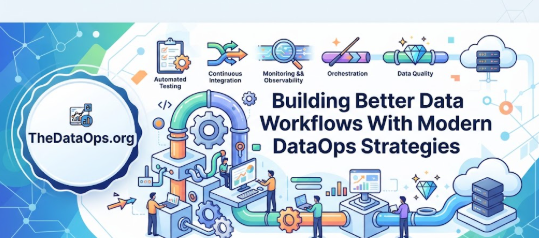
To fix these problems, teams use DataOps. DataOps brings modern software development habits into data operations. It turns messy manual tasks into smooth, automated systems. Educational platforms like TheDataOps.org help engineers and leaders understand these modern practices. With clear methods, companies can deliver clean information on time.
Understanding DataOps and How It Works
DataOps is a working method that helps people build, test, and deliver data quickly and safely. It blends data engineering with smart operations and agile teamwork.
Think of a water supply network in a city. Rain fills a reservoir. Huge pipes carry the water to a cleaning station. Filters take out dirt and germs. Sensors test the water every minute. Finally, clean water flows out of household taps. If a pipe breaks or dirt slips in, an alarm rings right away.
Data works the exact same way:
- What it is: A set of practices that treats data flows like a factory line.
- Why it exists: Traditional teams work in silos. Engineers write code, operations teams run servers, and analysts read charts. When something breaks, nobody knows who should fix it. DataOps unites these groups.
- How it works: Teams build automated checks around their data streams. They write code to move records, test each step, and watch for bugs.
- Real example: An online store collects shopping cart orders. Instead of waiting for a person to run a script each morning, an automated pipeline cleans, checks, and loads the orders every ten minutes.
The Five Steps of the Data Lifecycle
To make data reliable, teams follow a simple cycle:
- Build: Engineers write small scripts to collect and transform raw records.
- Test: Automated checks verify that numbers match expected ranges before saving.
- Automate: Systems run tasks on set schedules without human intervention.
- Observe: Dashboards track how fast jobs finish and whether records look correct.
- Improve: Teams study failed jobs and fix the root causes so errors never repeat.
Why DataOps Matters for Growing Organizations
When data workflows grow without rules, chaos follows. Companies need clear methods to keep systems running smoothly.
First, DataOps speeds up data delivery. Business teams do not need to wait weeks for new reports. Changes go live in days or hours because automated checks prevent costly mistakes.
Second, it improves teamwork. Data engineers, software developers, and analysts use the same tools and language. Everyone knows where raw files sit, how jobs transform them, and who receives the final tables.
Third, it cuts down on boring manual work. Engineers should not spend their mornings copying files between cloud buckets. Automated systems handle these repetitive chores, giving technical staff time to build useful features.
Finally, it creates trust. When leaders know automated tests check every row, they make business decisions with confidence.
DataOps Training
Learning these modern operations requires clear guidance. Many engineers know how to write basic queries, but they have never managed automated production systems. That is why structured DataOps Training has become valuable.
Good training covers foundational engineering habits. Learners study how to break large projects into small tasks using agile methods. They learn how to write automated tests that check data types, missing values, and record counts. Training also shows how continuous integration works for database code.
Beyond code, learners explore cloud systems and monitoring setups. They discover how to spot stuck pipelines before business teams notice broken charts. Platforms like TheDataOps.org share educational guides and structured learning paths that help engineers build practical skills in these areas.
DataOps Certification
As companies build larger data teams, they want reliable ways to check technical skills. A DataOps Certification helps professionals validate their understanding of pipeline design, testing, and operations.
Earning a credential shows that an engineer understands key operational ideas. It proves they know how version control works, how to schedule jobs, and how to spot pipeline slowdowns.
However, paper certificates alone are not enough. Practical experience matters just as much. The best way to prepare is to build real sample projects alongside study materials. When engineers combine theoretical knowledge with hands-on practice, they become valuable assets to their teams.
Structured DataOps Course Learning
A complete DataOps Course takes students through a step-by-step learning journey. Jumping directly into complex cloud tools often confuses beginners. A structured path prevents this issue.
Good courses begin with fundamentals. Students learn how raw records move from transactional databases into warehouses. Next, they practice writing automated tests and using code repositories.
After mastering basics, the course introduces orchestration, container tools, and cloud platforms. Finally, students learn how to run workloads in production. This step-by-step approach ensures students understand how each part fits together before handling mission-critical pipelines.
DataOps Tools
Teams rely on specialized DataOps Tools to automate daily work. Different tools handle different parts of the pipeline:
- Workflow Orchestration: Apache Airflow schedules tasks and runs them in a specific order. If task A fails, Airflow stops task B from running bad updates.
- Data Streaming: Apache Kafka moves high-speed event streams, such as real-time payment events, between applications.
- Large-Scale Processing: Apache Spark crunches billions of rows across clusters of computers in minutes.
- Automation and CI/CD: Jenkins and GitLab CI run automated tests every time an engineer updates pipeline code.
- System Monitoring: Grafana displays live dashboards showing computer memory, processing speed, and error rates.
- Container Management: Kubernetes runs applications in isolated containers so software behaves the same way in testing and production.
Choosing the right tool depends on your team’s actual workload, not on what is popular.
Implementing a Complete DataOps Platform
A DataOps Platform brings isolated tools together into one connected workspace. Instead of logging into five different dashboards, engineers manage their full environment from a central hub.
An integrated platform handles ingestion, transformation, testing, orchestration, and access rules. When these pieces talk to each other, errors are caught early. For example, if an ingestion job receives incomplete records, the platform halts the transformation step and alerts the team immediately.
This tight integration also simplifies governance. Security teams can see where data originates, who altered it, and which dashboards display it to end users. Organizations looking to design or upgrade these systems often consult resources on TheDataOps.org or explore DataOps Consulting to build reliable architectures.
Data Pipeline Automation
Manual pipeline work is slow and introduces human error. Data Pipeline Automation replaces hand-run scripts with automated workflows.
Consider a retail company. Every night at midnight, an automated trigger pulls receipt logs from thousands of store registers. The pipeline transforms currency codes, removes duplicate transactions, and runs validation checks. If all tests pass, the system deploys the cleaned records into the reporting database by 4:00 AM.
Automated pipelines run on set schedules or react to events like new file uploads. By removing manual effort, companies get their reports on time every single day.
Data Observability
Many teams only check whether a pipeline finished with a green checkmark. But a job can finish successfully and still load completely wrong numbers. This is why teams need Data Observability.
Data observability means understanding the internal health of your data by watching its outputs. It tracks five main signals:
- Freshness: Did the data arrive on time?
- Volume: Did the table receive 10,000 rows as expected, or only 10?
- Schema: Did an engineer change a column name without warning?
- Quality: Are there blank customer IDs or negative purchase totals?
- Lineage: Which upstream pipeline fed this broken table?
Observability tools notify engineers about subtle data problems before executives see corrupted reports.
Data Quality Management
Bad data leads to bad decisions. If an algorithm reads incorrect pricing tables, a store might sell products below cost. Data Quality Management sets clear rules to keep records clean, accurate, and complete.
Quality checks act like safety gates along a conveyor belt:
- Validation rules: The system checks that email addresses contain valid characters.
- Range checks: Age fields cannot contain negative numbers.
- Completeness checks: Critical fields like order IDs cannot be null.
- Consistency checks: Country codes must follow standard two-letter formats.
Catching errors early stops bad information from spreading across company systems.
The Role of a DataOps Engineer
A DataOps Engineer builds the plumbing and safety rails that keep company data flowing smoothly. They do not spend all day analyzing charts. Instead, they build tools that help other engineers work faster.
Key daily responsibilities include:
- Writing scripts to automate data movement.
- Building continuous delivery pipelines for data models.
- Setting up monitoring rules and alert systems.
- Maintaining cloud infrastructure and container clusters.
- Helping analytics teams troubleshoot pipeline failures.
To succeed, these engineers combine coding skills in Python and SQL with knowledge of cloud platforms, Git repositories, and automated testing tools.
A Practical Pipeline Example
Let us examine a practical example from an online grocery app.
Customers place orders on their phones. The order service writes each purchase to an operational database. Every fifteen minutes, an automated ingestion tool copies new orders into cloud storage.
Next, a transformation job formats customer addresses and totals line items. Before saving these records, automated test suites inspect the batch. They verify that no order totals are negative and all customer IDs exist.
If a test fails, the pipeline isolates the bad batch in a quarantine folder and sends an alert to the engineering team. The main dashboard keeps showing trusted historical data, protected from corrupt records. Once an engineer fixes the bad record, the pipeline resumes smoothly.
Core Real-World Use Cases
DataOps provides clear benefits across many industries:
- Healthcare: Hospitals combine patient records from clinics, pharmacies, and testing labs. Automated validation ensures medication dosages match strict standards before doctors view history files.
- Banking: Financial firms scan card swipes for fraud. Real-time pipelines clean transaction records and pass them to detection models within seconds.
- E-Commerce: Retailers track inventory across multiple warehouses. Fast, reliable pipelines prevent websites from selling out-of-stock items.
- Manufacturing: Factory machines use sensors to detect overheating parts. Observability tools watch sensor feeds to schedule maintenance before machines break down.
Core Benefits of DataOps
Adopting these practices creates measurable operational improvements:
| Benefit Area | Traditional Data Operations | Modern DataOps Approach |
| Release Speed | Updates take weeks of manual work | Changes deploy safely in hours |
| Error Detection | Users discover errors on live charts | Automated tests catch bugs early |
| Testing | Occasional manual checks by analysts | Automated testing runs on every build |
| Team Workflow | Teams work in isolated silos | Engineers and analysts share workflows |
| System Visibility | Failures stay hidden until jobs crash | Observability tools track health live |
Common Challenges and How to Overcome Them
Adopting DataOps is not always simple. Teams often run into common roadblocks:
- Too Many Tools: Buying every new tool creates a confusing mess. Solution: Start simple. Pick one orchestration tool and one testing framework before adding more software.
- Skill Gaps: Team members may not know software engineering habits like Git branching or automated testing. Solution: Invest in training courses and encourage pair programming.
- Legacy Systems: Old databases often lack automation interfaces. Solution: Move records into modern cloud storage layers where automated tools operate easily.
- Resistance to Change: Staff may prefer running familiar manual spreadsheets. Solution: Demonstrate how automation eliminates boring midnight maintenance calls.
Mistakes to Avoid
When building out data operations, avoid these frequent traps:
- Automating Broken Processes: If your transformation logic is flawed, automating it only produces bad data faster. Fix the logic first.
- Testing Code but Ignoring Data: Your Python script might run perfectly, but if the incoming CSV file has empty columns, the output is useless. Always test both code and data.
- Neglecting Documentation: When pipelines run automatically, engineers sometimes forget to document them. Keep clear notes on data sources and transformation rules.
- Alert Fatigue: Sending an email alert for every minor event causes engineers to ignore alerts entirely. Set notifications only for actionable problems.
Best Operational Practices
To build reliable data systems, follow these proven practices:
- Store all pipeline definitions, transformations, and tests as code in version control.
- Run automated test suites before merging new code into main production branches.
- Set up clear ownership so everyone knows who maintains each pipeline.
- Build sandbox environments so engineers can test changes on sample data safely.
- Perform blameless post-mortem reviews after major failures to fix root causes.
Security, Governance, and Compliance
Speed should never come at the cost of security. Data pipelines handle sensitive personal, health, and financial information.
Modern workflows use role-based access control. Engineers and pipelines only receive the minimum permissions needed to finish their work. In addition, sensitive fields like social security numbers or credit card codes must be masked or encrypted before landing in analytics tables.
Governance also requires detailed audit trails. Regulators must be able to see where numbers came from and who had access to them. Automated metadata tracking logs every transformation step, keeping records audit-ready.
DataOps and Artificial Intelligence
Modern artificial intelligence models depend entirely on high-quality training data. If an engineering team feeds messy, duplicate, or outdated text into a machine learning model, the model will produce unreliable answers.
DataOps pipelines clean, format, and organize raw records before models begin training. Furthermore, automated monitoring tracks live data inputs for drift. If customer behavior changes suddenly, observability tools detect the shift so engineers can update their models quickly.
Building a Career in DataOps
Demand for skilled data professionals continues to grow. If you want to work as a DataOps Engineer, focus on mastering fundamental skills:
- Core Languages: Practice writing clean Python scripts and complex SQL queries.
- Version Control: Learn how to create branches, open pull requests, and review code in Git.
- Automation Tools: Experiment with tools like Airflow for scheduling and Docker for packaging code.
- Cloud Basics: Understand how managed object stores, warehouses, and compute engines connect.
Working through real-world projects and learning resources on platforms like TheDataOps.org can help you build practical experience step by step.
Who Can Benefit From TheDataOps.org?
Different professionals find value in structured learning resources:
Beginners
Beginners can learn basic terms, understand how databases operate, and explore how data flows from apps to dashboards.
Data Engineers
Working engineers can find guidance on automating daily tasks, adding robust testing suites, and building cleaner architectures.
DevOps Professionals
DevOps specialists can learn how data pipelines differ from standard web apps, helping them manage data infrastructure more effectively.
Analytics Teams
Analysts learn how automated checks protect their dashboards, making it easier to collaborate with data engineers.
Organizations
Companies exploring modern data practices can use educational guides to plan system upgrades and improve operational reliability.
Essential Skills for Modern Data Operations
The table below outlines the core technical skills needed to maintain reliable production pipelines:
| Technical Skill | Why It Matters | Practical Daily Use |
| Python | Flexible scripting and automation | Building data extractors and transformers |
| SQL | Universal language of structured data | Writing data models and validation queries |
| Git Version Control | Safe collaboration and change tracking | Reviewing code changes before production deployment |
| Workflow Orchestration | Managing dependencies between jobs | Setting execution order and automated retries |
| Observability & Alerts | Catching data errors before users do | Monitoring data freshness, volume, and schema shifts |
Frequently Asked Questions
What is DataOps in simple terms?
DataOps is a way of working that combines automated testing, smart scheduling, and teamwork to deliver clean, accurate information quickly and reliably.
Why is DataOps important for companies?
It prevents pipeline crashes, catches corrupted records early, and eliminates repetitive manual tasks so teams can trust their business reports.
What does DataOps Training cover?
Training covers pipeline automation, writing automated data tests, setting up workflow orchestrators, and managing cloud storage systems.
Is earning a DataOps Certification helpful?
Yes, earning a certification helps validate that you understand modern data operations, pipeline design patterns, and continuous integration concepts.
What topics are included in a DataOps Course?
A comprehensive course teaches fundamentals, data modeling, automated testing, container tools, workflow scheduling, and production monitoring.
What are common DataOps Tools?
Common tools include Apache Airflow for scheduling, Kafka for streaming, Spark for heavy data processing, Jenkins for automation, and Grafana for monitoring.
What does a DataOps Platform do?
A platform brings ingestion, transformation, scheduling, testing, and security controls into a single connected system.
What is the difference between data monitoring and data observability?
Monitoring tells you when a job crashes. Observability looks deeper to tell you if the data inside the pipeline is fresh, complete, and accurate.
Why is Data Quality Management necessary?
Without quality rules, broken rows slip into reports. Bad data leads executives and algorithms to make poor business choices.
What are the main duties of a DataOps Engineer?
They build automated deployment systems, configure pipeline orchestrators, maintain testing suites, and ensure data flows reliably across the organization.
Final Thought
Modern organizations rely on data to make critical choices every day. However, without good operational habits, pipelines break easily, leaving teams with delayed dashboards and bad numbers.
Adopting DataOps solves these issues. By combining automated testing, clear orchestration, continuous observability, and strong quality controls, companies can turn fragile scripts into dependable pipelines. Whether you are building your first automated workflow or advancing your technical career, educational resources from TheDataOps.org provide clear guidance to help you build reliable systems that last.
Leave a Reply