Bike, Scooter and Car Rental in India: A Step-by-Step Booking Guide

October 13, 2026 · 19 reads
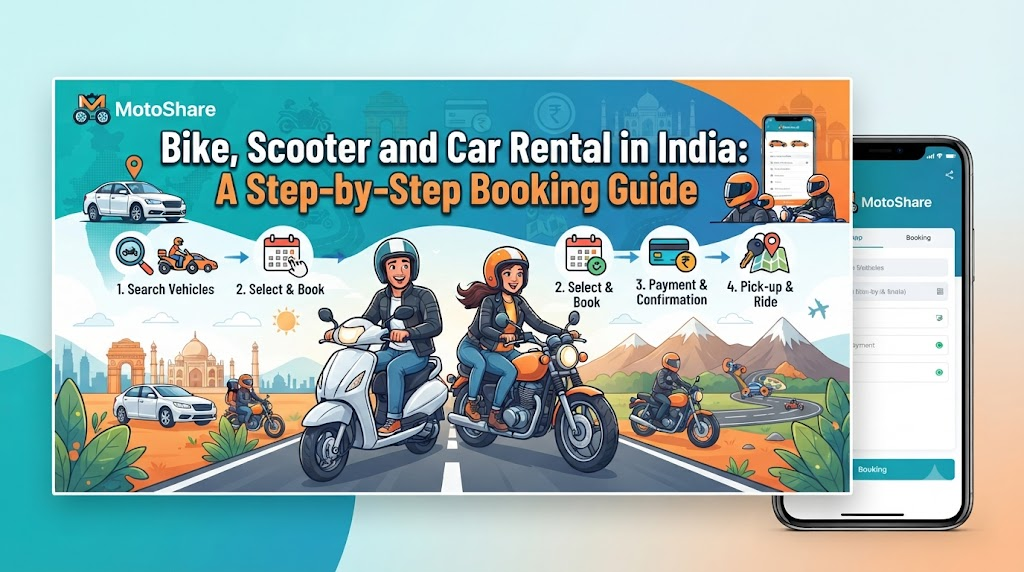
A rental does not start when you get the keys. It starts days earlier, when you first think about how you will get around. And it does not end when you ride away. It ends when you hand the vehicle back and the deposit comes home.
Seen this way, renting is a short project with a few clear stages. Vehicle rentals now play a part in daily travel, tourism, business trips and weekend journeys. Bike rental in India keeps growing as more riders look for flexible options. Car rental in India draws families and small groups who like to set their own schedule.
This article follows the whole journey, from the first search to the final return. It also explains where MotoShare, an online rental marketplace, fits in along the way.
Understanding MotoShare and Its Purpose
MotoShare is a marketplace for renting vehicles. It does not work like one shop with a fixed set of bikes. It links people who need a vehicle with local rental providers who list vehicles for rent.
The information shared about it says you can look at motorcycles, scooters, cars and bicycles. You can search by city and think about how long you need the vehicle. It mentions online booking options and covers places in India and other parts of Asia. It also refers to verified local providers.
Details like prices, listed vehicles and booking steps can change. Read each listing closely, and use this article as general guidance.
Why Flexible Vehicle Rentals Matter
People rent for simple, practical reasons:
- They are visiting a place for a short time.
- They want to try a vehicle before buying one.
- They need a different kind of vehicle for one trip.
- Their own vehicle is being repaired.
- They are in another city for a short course or project.
Renting is not perfect. Over a long period, rent can add up, and every rental comes with rules on distance, damage and return time. It works best for needs that are clear and limited.
Your Rental Timeline, Stage by Stage
Two Weeks Out: Decide What You Really Need
Start by asking basic questions. Who is travelling? How far will you go? What are the roads like? How much experience do you have?
Then match the vehicle to the answers.
Scooters are light and easy to park. Many visitors who look into scooter rental in India want them for short city rides and small towns.
Motorcycles have more power and feel steadier on longer rides.
Premium and adventure bikes suit long tours and rough roads. They are heavy and need real riding experience, and the terms are often stricter.
Cars keep you out of sun and rain and carry people and bags. People who search for self drive car rental India often like having their own route and stops.
Bicycles are good for slow, short outings.
If you choose a self drive bike rental, you control the route and the pace. You are also responsible for safe riding and for the vehicle while it is with you.
One Week Out: Search and Compare
Now start looking at real listings. Many people prefer to rent a bike online at this stage because they can see choices, compare dates and read details from home.
If you are already in a new place and need something soon, you may type bike rental near me and see what is close. That can work, but check the pickup point, the opening hours and the return rules. A place that looks near on a map may take time to reach in traffic.
Online search does not mean every option is available everywhere. Some bookings may still need a call. Use it to narrow your list, then read each listing in full.
When you compare, look beyond the daily rate. Note these items for each listing:
- Total cost: rent, taxes, fuel and any extras.
- Deposit: the amount, how you pay and when it returns.
- Insurance: what it covers and what you pay yourself.
- Distance limit: whether kilometres are capped.
- Fuel policy: how you receive and return the vehicle.
- Cancellation terms: what happens if plans change.
Cities Change the Plan
Where you are going matters.
A beach town may have narrow lanes, busy peaks and slippery roads after rain. Someone planning bike rental in Goa might think about helmets, safe parking near popular spots and careful riding after dark.
A large city brings heavy traffic and long distances. Someone comparing bike rental in Bangalore might care about how the vehicle handles in slow traffic, how far the pickup point is from home or work and what the return time is if the day runs late.
These are only examples. In any city, think about the roads and the weather.
Beyond India
Many Asian places have busy towns, island roads and hill routes where a rented two-wheeler is common. This is why motorcycle rental Asia is a growing area of interest, and why regional marketplaces try to link visitors with local providers across several countries.
Each country has its own traffic laws, licence needs and insurance terms. Learn them before you ride.
Short Hire or Long Stay
The timeline looks different for a one-day rental and a one-month rental.
For a short rental, watch the distance limit and the late return fee. A small delay can change the bill.
For a longer stay, ask about servicing, repairs and what happens if the vehicle develops a fault. Ask whether you keep the same one for the whole period. When you use a vehicle daily, its condition matters much more.
Three Days Out: Sort Your Papers
Gather your documents early. This usually means your driving or riding licence and an ID. Visitors from other countries may need extra papers, so confirm the rules in advance. Save a copy of your booking details on your phone.
The Night Before: Get Ready
Check the pickup address and time. Pack a small bag that fits the vehicle you will use. Charge your phone. Look at the weather forecast and plan your first day’s route, with extra time for traffic.
Pickup Day: The Ten-Minute Check
Before you ride away, walk around the vehicle. Check the tyres, brakes, lights, mirrors and horn. Note the fuel level. Photograph any scratches or marks and show them to the provider. Confirm the return place and time once more.
On the Road: Habits That Keep You Safe
Wear a helmet on a two-wheeler every time. Keep a safe gap from other vehicles and avoid long rides in the dark when you can. Park in safe places and lock the vehicle. If something feels wrong with the vehicle, stop and contact the provider.
Return Day: Finish Cleanly
Arrive with time to spare. Refuel if the policy asks for it. Walk around the vehicle with the provider and compare it with your pickup photos. Ask when the deposit will come back and keep your receipt.
Different Travellers, Different Timelines
- Tourists often need only a few days and care most about flexibility.
- Commuters need a dependable vehicle for weeks and care about servicing.
- Students watch budget and short distances.
- Professionals often want comfort and good timing for meetings.
The stages stay the same. Only the weight of each one changes.
A Practical Rental-Selection Process
Here is the short version, as general guidance.
- Choose your place and dates.
- Check what is available.
- Compare prices and terms.
- Prepare your documents.
- Confirm the booking and keep the details.
Common Rental Mistakes to Avoid
- Starting the search too late and choosing in a hurry.
- Ignoring the deposit and insurance details.
- Skipping the check at pickup.
- Forgetting the return time or place.
- Picking a vehicle that is too heavy or powerful for your skill.
- Leaving documents behind.
One Realistic Example
Tanvi is a student planning a weekend visit to an old town. The main sights are close together, and she does not plan to travel far. Two weeks before, she thinks about her needs: she is travelling alone, the area is small and she enjoys slow sightseeing.
A week before, she compares a bicycle and a scooter. The bicycle costs less and suits the short distances. The scooter is faster but needs more attention to rules and fuel. She reads the terms for both and decides to rent a bicycle for the first day and a scooter for a longer ride on the second day.
Three days before, she checks her ID and licence. The night before, she packs a small bag and checks the weather. On pickup day, she inspects each vehicle and takes photos. On return, she walks around with the provider and keeps her receipt.
Because she followed the stages, Tanvi spent her weekend enjoying the town and not solving problems.
Frequently Asked Questions
What should I do the night before pickup?
Confirm the pickup address and time, pack a small bag, check the weather and plan your route. Keep your documents ready.
What if I will arrive late for pickup?
Tell the provider as early as you can. Ask whether the pickup time can change and whether any fee applies.
Should I refuel before returning the vehicle?
It depends on the fuel policy. If the rule says to return it at the same level, refuel nearby and keep the receipt.
Where should I park a rented vehicle?
Choose a safe, legal place, preferably well lit and busy. Lock the vehicle and take your valuables with you.
Is a bicycle a good choice for a short town visit?
It can be, especially when sights are close together. Check the terms and make sure the bicycle suits your height and comfort.
How long does the return check usually take?
It is often quick, but leave extra time. Comparing the vehicle with your pickup photos helps avoid disagreements.
Conclusion
Renting a vehicle goes more smoothly when you treat it as a timeline. Decide what you need, compare the full picture, sort your papers, check the vehicle at pickup, ride with care and return it cleanly.
Marketplaces like MotoShare make it simpler to look at rental options across cities and vehicle types in one place. Use that as a starting point, then take care of the details yourself. A little planning at each stage can make the whole journey easier.
Leave a Reply