DronesBee Explained: A Plain Look at Drone Research and Professional Drone Help

September 30, 2026 · 13 reads
Introduction
The drone world can feel confusing at first. Some drones are made for travel videos. Some map farmland. Others inspect towers and bridges so people do not have to climb them. Each one has a different camera, battery, sensor set, and price.
Choosing the right one is rarely quick. You need to know your purpose, your budget, and the features you want. You also need to understand the drone specifications that matter for your job, like range, payload, and operating conditions. And some people do not want to buy a drone at all. They want a skilled pilot to do the work.
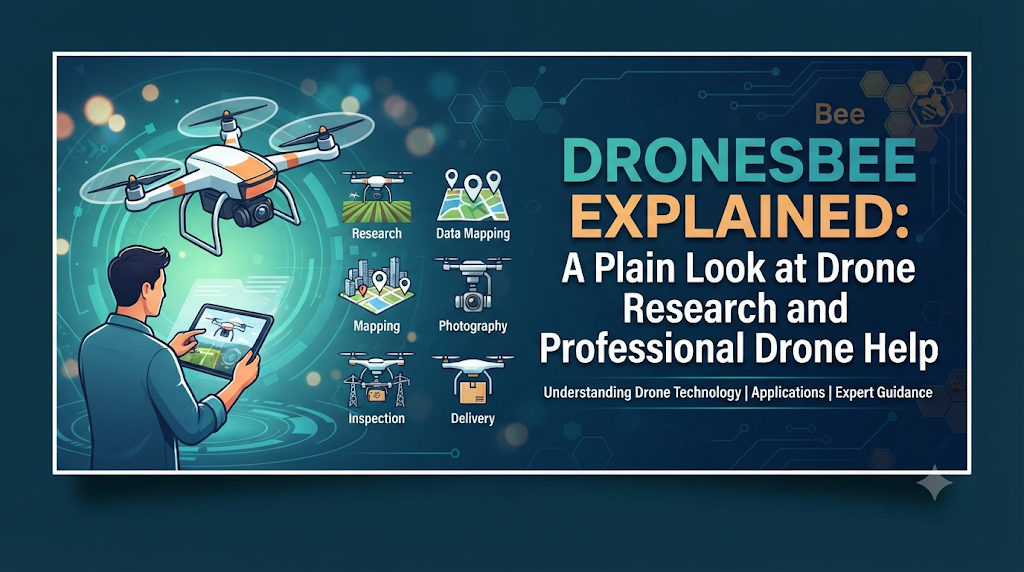
DronesBee is a drone and UAV platform built around both needs. This article explains what it offers, who it helps, and how to use this kind of information to make a sound decision.
What Is DronesBee?
DronesBee is a drone and UAV ecosystem platform. Think of it as a large meeting point for people who want to learn about drones, buy them, fly them, or hire someone who does.
It brings several things together in one place:
- A drone database with products from makers such as DJI, Autel Robotics, Skydio, Parrot, AeroVironment, and others
- Product information and user-written opinions
- A way to find professional drone operators and services
- Industry news and UAV technology updates
- Information on regulations
- Forums and community resources
- Educational content
So the platform has two sides. One side helps people research and compare drones. The other side helps people and businesses find professional drone skills.
That mix matters. A drone is a tool. But a tool is only half the story. The other half is the person flying it and the job being done.
Who Gets Value From a Platform Like This?
Different people come to the drone world with very different questions. Here is what each group usually wants.
Everyday buyers. These are people who want a first drone. They often ask simple things. Is it easy to fly? Does it take good video? Is it small enough to carry on a trip?
Drone enthusiasts. Hobbyists love details. They want to know how models differ, what is new in the industry, and what other pilots think. Forums and community discussions suit them well.
Professional pilots. Working pilots need more than a nice camera. They look at reliability, sensor options, software support, and how a drone fits paid work.
Commercial operators. A company running a fleet thinks about safety, training, upkeep, and cost over time. They also follow rules and industry changes closely.
Businesses. A builder, farm owner, or property manager may not care about drone models at all. They care about getting a job done by someone who knows what they are doing.
Researchers. Students and researchers study UAV technology, compare platforms, and track how the industry grows.
Industry professionals. People who work near the drone sector use news, product data, and regulation updates to stay informed.
What Can You Actually Research About Drones?
The product side covers a lot of ground. You can look at drone models, their makers, and the categories they fall into. A small folding camera drone and a heavy industrial aircraft are both drones, but they are built for very different lives.
Here is what a careful buyer can look up:
Drone specifications. These are the technical facts. Flight time, camera type, weight, size, range, sensors, and how much weight the drone can carry. Specifications tell you what a drone can do on paper. For example, a drone that carries a special sensor is a different tool than one with only a standard camera.
Features. Obstacle sensing, automatic flight modes, and return-to-home functions can change how easy a drone is to use. A beginner may value these more than a raw number.
Drone reviews. Reviews add the human side. They often describe how a drone behaves in wind, how steady the footage looks, how long the battery feels like it lasts in real use, and what annoyed the owner. Specifications show the promise. Reviews often show the daily experience.
Use cases. A good listing tells you what a drone is commonly used for. That saves time, because a drone made for filming will not always suit a mapping job.
Drone comparison. Once you know a few options, you can put them side by side. A proper drone comparison is not about finding a winner. It is about seeing which one fits your needs with the fewest compromises.
Professional and industrial drones. Some users need more than a consumer drone. They can look at models built for demanding work and see how they differ from everyday ones.
The key point is simple. One drone will not suit everyone. A great filming drone may be a poor choice for crop checks. A rugged inspection drone may be too heavy for a holiday trip.
How to Compare Drones Before Choosing One
Most buying mistakes start with a rushed comparison. Slow down and work through these points.
Intended use. Start here. Write down what the drone must do. Everything else depends on this.
Camera needs. Do you need sharp video, clear still photos, or a thermal view? A camera that suits wedding footage may not suit a technical job.
Flight time. A longer flight means fewer battery swaps. But do not trust one number alone. Wind and payload cut flight time in real life.
Range. This is how far the drone can travel and still stay connected. Wide-open fields and crowded cities behave differently.
Payload. Some jobs need the drone to carry extra equipment. Check what weight it can handle.
Sensors. Mapping, inspection, and farm work often depend on special sensors. The right sensor can matter more than the camera.
Size and portability. A drone you leave at home will never get used. Think about how you will carry it.
Weather. Rain, heat, cold, and strong wind all affect flight. Look at what conditions the drone can handle.
Software. Flight apps and editing tools shape your daily experience. Good hardware with awkward software can be frustrating.
Regulations. Rules vary by place and by drone weight. Check them before you buy.
Budget. Count the full cost. Extra batteries, spare parts, storage, and software can add up.
Maintenance and support. Ask how repairs work and whether parts are easy to get.
People often search for the best drones as if there is one right answer. There is not. The best option is the one that fits your purpose, your skill level, your location, and your budget. A drone that is perfect for a farm may be wrong for a real estate photographer.
How Professional Drone Services Work
Not everyone should buy a drone. Sometimes hiring a skilled operator is smarter, cheaper, and safer.
Professional drone services are paid jobs carried out by trained pilots using suitable equipment. Clients may include construction teams, property sellers, farmers, infrastructure managers, film crews, and environmental groups. The work can cover surveying, inspection, filming, field monitoring, and more.
A good service usually follows a clear flow:
- The client explains the job and what they need at the end.
- The operator checks the site, the conditions, and the rules.
- The right aircraft and equipment are chosen for that task.
- The flight is planned with safety in mind.
- The data, images, or video are collected and handed over.
Professional work asks for more than flying skill. The pilot needs the right equipment, knowledge of the job type, safe habits, and a clear understanding of what the project needs. A pilot who shoots beautiful scenery may not be the right person to inspect a tower. That is why matching the skill to the task matters.
DronesBee connects users with qualified operators and professional services, so people can look for this kind of help without starting from zero.
Where Different Drone Services Are Used
Drones now appear across many industries. Here are the main areas.
Looking at the World From Above
Aerial photography services capture pictures and video from the sky. Real estate sellers use them to show a property and its surroundings. Media teams use them for filmmaking and news. Construction firms use aerial photos to record progress. Tourism groups use them to show off places in a way ground cameras cannot.
The quality depends on the pilot’s eye, the camera, and the light. A skilled operator plans the shot, not just the flight.
Measuring and Mapping Land
Drone surveying services help collect data about land and sites. A drone can cover a large area and gather measurements that would take people much longer on foot. This supports land surveys, mapping, construction planning, and site measurement.
The main need here is accuracy. The equipment, the flight plan, and the skill of the operator all affect how useful the final data will be.
Checking Hard-to-Reach Places
Drone inspection services help look at places that are risky or slow to reach. Think of rooftops, towers, bridges, industrial equipment, and large construction sites. A drone can get close and record what it sees without anyone climbing or hanging from a rope.
Good inspection work depends on the right sensors, a stable aircraft, and a pilot who knows what to look for.
Watching Over Farms and Fields
Agricultural drone services support farm monitoring and field work. Drones can give a wide view of crops and land, helping farmers notice problems and check how fields look across a large area. The exact use depends on the drone and sensors involved, so the service should fit the farm’s actual goal.
Finding Local Operators
Many people type drone pilots near me when they need help. There is a good reason. Local pilots know the area, can reach the site easily, and often understand local rules and conditions.
Before choosing one, check a few things:
- Have they done work similar to your project?
- What equipment will they use?
- Do they understand the rules in your area?
- How do they handle safety?
- What will you receive at the end, and in what format?
- Do they explain things clearly?
A nearby pilot is a good start. A pilot with the right skills for your job is better.
A Five-Step Way to Choose a Drone or a Drone Service
Step 1: Define the Actual Need
Begin with the result, not the product. Ask what you want at the end. A set of photos? A site map? An inspection report? A drone for weekend fun? The clearer your goal, the easier every later choice becomes.
Step 2: Identify the Required Equipment or Service
Now decide whether you need to own a drone or hire a professional. A one-time job, or a job needing special skills, may suit a service. Regular, frequent flying may suit buying your own. This step saves many people from costly mistakes.
Step 3: Compare Important Factors
Put your options side by side. For drones, look at specifications, features, and real-world feedback. For services, look at experience, equipment, service scope, and how they deliver results. Judge every option against your goal from Step 1.
Step 4: Check the Provider or Product Carefully
Before you decide, verify. For a product, check what is included, what support exists, and what rules apply where you live. For a service provider, check their past work, their safety approach, and what they promise to deliver. Ask questions. A good provider answers them clearly.
Step 5: Match the Choice to the Project
Finally, pick what fits your project, not what is most popular. A famous drone or a busy provider is not automatically right for your job. The right choice is the one that meets your needs, your timeline, and your budget.
A Quick Table: What to Check for Each Need
| Requirement | What to Check |
|---|---|
| Photography and video | Camera quality, stability, and the type of images needed |
| Surveying and mapping | Measurement ability, mapping tools, and accuracy needs |
| Inspection | Sensors, reach, and operating conditions |
| Agriculture | Field size, coverage, and what needs monitoring |
| Commercial work | Pilot skill, safety habits, and related project experience |
Buying a Drone vs Hiring a Pilot
| Question | Buying a Drone | Hiring a Pilot |
|---|---|---|
| How often will you need it? | Often or regularly | Once or now and then |
| Who does the flying? | You or your team | A trained operator |
| What skills are needed? | You must learn or train | The provider brings them |
| What about equipment? | You buy, store, and maintain it | The provider handles it |
| Best for | Hobby use or ongoing in-house work | Specialized or one-time projects |
Common Mistakes to Avoid
Choosing a drone only because it is popular. A popular drone may not fit your task. Popularity shows what many people bought, not what you need.
Looking only at price. The cheapest choice can cost more later if it lacks features or breaks often. The same goes for services.
Ignoring drone specifications. The numbers and technical details tell you what a drone can and cannot do. Skipping them leads to surprises.
Comparing drones without a use case. A comparison means little if you have not decided what the drone must do.
Hiring a provider without checking experience. A good pilot in one field may be new to another. Ask about similar work.
Ignoring local rules. Drone regulations differ from place to place. Breaking them can cause fines, delays, or safety problems.
Assuming every drone can do every job. Drones are built for different tasks. One model rarely covers everything well.
Forgetting maintenance and safety. Batteries wear out, parts break, and safe flying needs care. Plan for these from the start.
A Example: How a Construction Team Might Work It Out
Northfield Builders is a made-up construction company planning a large building project. The team wants aerial images of the site and accurate measurements of the land.
First, they define the need. They want progress photos every few weeks and a site map before work begins.
Second, they ask whether to buy or hire. Nobody on the team has flown a drone for mapping. The mapping job is a one-time need at the start, with photos later. They decide to hire a professional for the map and think about their own drone for the photos.
Third, they compare. For the mapping job, they look at operators’ experience, the equipment used, and the kind of data delivered. For the photo drone, they check camera needs, flight time, and size.
Fourth, they verify. They ask operators about past site work, safety plans, and local rules. They read feedback on the drone they are considering.
Fifth, they match the choice to the project. They hire an operator for mapping and later buy a simple camera drone for regular progress photos.
Nobody chose the most famous name. They chose what fit. That is what structured research looks like.
Frequently Asked Questions
1. What is DronesBee?
It is a drone and UAV platform. It combines a drone database, service discovery, operator listings, industry news, forums, and learning resources for consumers, pilots, businesses, and researchers.
2. What kinds of drones can people look up?
Users can explore models from makers such as DJI, Autel Robotics, Skydio, Parrot, AeroVironment, and others. These include drones for everyday use as well as professional and industrial work.
3. Why do technical details matter so much?
Flight time, camera type, payload, range, and sensors decide what a drone can do. Without them, you are guessing. Drone specifications help you see whether a model suits your task.
4. How does putting drones side by side help a buyer?
A drone comparison shows trade-offs clearly. One model may fly longer but carry less. Another may be lighter but have fewer sensors. Seeing this helps you pick what matters most to you.
5. What should I look for in drone reviews?
Look for real-use details. Notice comments about wind, battery life in practice, footage steadiness, software, and support. Also check whether the reviewer used the drone for a similar task to yours.
6. How can I find a pilot in my area?
Searching for drone pilots near me is a common start. Then check each pilot’s past work, equipment, safety approach, knowledge of local rules, and what they deliver at the end.
7. When is it smart to hire aerial photography services?
They help when you want polished visuals and do not want to learn flying and editing yourself. Property sellers, event organizers, and media teams often find them useful.
8. What are drone surveying services used for?
They support land measurement, mapping, and site planning. Construction and infrastructure teams often use them when they need site data covering a wide area.
9. When might a business need drone inspection services?
They are helpful when an asset is hard, slow, or risky to reach. Roofs, towers, bridges, and industrial equipment are typical examples.
10. What do agricultural drone services help with?
They help farmers monitor fields and crops from above. This gives a wider view of land than walking the rows and supports better field decisions.
Conclusion
The drone world is large, and choosing well takes some thought. DronesBee brings together two sides of it. One side helps people research, compare, and understand drones. The other helps businesses and individuals find professional drone operators and services.
Whether you are buying a drone or hiring a pilot, the same habits help. Start with your real requirement. Look at what a drone can actually do and read its specifications with care. Think about the project conditions, the experience of the people involved, and how safety will be handled. Check local regulations. And count the full cost, not just the first price.
Drones are useful tools, but only when the right tool meets the right job. A little careful research at the start can save a lot of time and money later.
Leave a Reply